
Home maintenance is a continuous cycle of chores. You spend hours keeping everything in top shape. Sometimes, specific parts of your house scream for a permanent fix rather than a temporary patch. Water management around your roof is a prime example.
When your current setup fails to redirect rain away from your foundation, serious structural issues can follow. Recognizing the right time to upgrade your drainage system saves you money and weekend free time.
Frequent Cleaning and Clogs Call for k-guard gutters
Spending your weekends balanced on a ladder scooping out muck is exhausting. You might clear out the debris every spring and fall, yet blockages keep happening. Upgrading to an integrated system like k-guard gutters helps prevent this constant buildup from taking over your life.
When organic matter continually traps water near your roofline, it rots the fascia boards. A truly effective setup keeps leaves out completely. You deserve to spend your weekends relaxing on the porch instead of performing dangerous chores at roof level.
Water Spills Over the Sides during Heavy Rain
A gentle shower might flow perfectly down your downspouts. Heavy storms tell a completely different story. If sheets of water cascade over the front edge of your roof during a downpour, your channels are simply too small or heavily obstructed.
This overflow damages your landscaping and pools around your foundation. That pooled water eventually finds its way into your basement. Upgrading to a wider trough design ensures massive volumes of rain move safely away from your home.
Leaves from Neighboring Trees Outnumber Your Own
You might not even have large trees in your yard. The wind easily carries foliage from the next street over straight onto your roof. Suddenly, your drainage system is packed with oak and maple leaves that do not even belong to you.
Relying on basic open troughs means you are constantly dealing with someone else’s yard waste. Closing off the top prevents this endless accumulation and lets the wind blow those stray leaves right off your roof.
Downspouts Keep Backing Up Despite Frequent Rodding
Clearing a clogged vertical pipe requires specialized tools and a lot of patience. You push a snake down the spout, flush it with a hose, and hope the water flows freely again. A few weeks later, the exact same blockage returns. Debris gets caught on the internal screws and seams of standard pipes.
A seamless high capacity vertical pipe eliminates these frustrating choke points. Water flows without interruption when there is nothing inside to snag passing twigs.
Ice Dams Form along the Same Roofline Each Winter
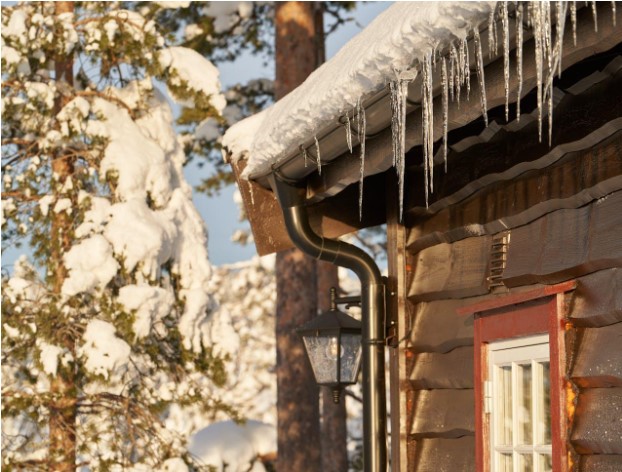
Winter brings a unique set of challenges to your home exterior. Snow melts on the warmer parts of your roof and freezes as it reaches the cold edges. Trapped water in your troughs freezes solid and expands, tearing the metal away from the wood.
This ice forces water under your shingles and ruins your ceiling. Installing a system that sheds debris ensures melting snow flows freely away before the temperature drops at night.
Current Guards Miss Pine Needles and Shingle Grit
Mesh screens and cheap covers often create more problems than they solve. Tiny openings get clogged with sand from your shingles and small pine needles. The water cannot enter the trough and simply runs right over the top.
You end up having to clean the covers themselves, defeating their entire purpose. A solid hood design relies on liquid adhesion to pull water inside while shedding all solid material straight to the ground.